
LEARN · RADIONICS
What is Radionics?
An introduction to radionics: its principles, its history and how practitioners use it today as a complementary approach to wellbeing.

UNDERSTANDING RADIONICS
A Definition
Radionics is a complementary approach that uses specially designed instruments, numerical rates and the trained attention of the practitioner to assess and balance the subtle energy field of a person, animal, plant or environment. It is based on the idea that every living system has its own vibrational pattern, and that this pattern can be analysed and supported at a distance through a sample known as a witness.

A Brief History
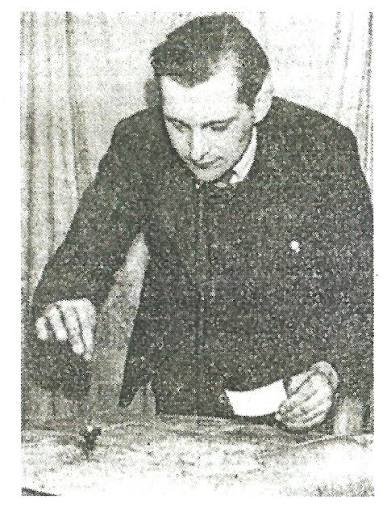
Radionics began in the early twentieth century with Dr Albert Abrams (1863–1924), an American specialist in diseases of the nervous system. The name combines “radiation” and “electronics”, the two ideas at the heart of his method. Dr Ruth Drown later showed that radionic work could be carried out at a distance, while George de la Warr, T. Galen Hieronymus and Malcolm Rae developed new instruments and the use of a hair sample as a witness. The Radionic Association was founded in Britain in 1943, and from the 1970s Dr David Tansley brought the chakras and subtle bodies into radionic analysis.

A PIONEER OF RADIONICS
Dr Bruce Copen
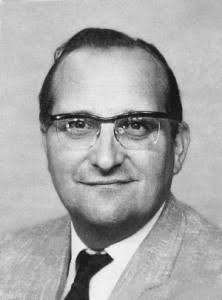
Dr Bruce Copen founded Bruce Copen Laboratories in Sussex, England, in 1947. A Doctor of Philosophy and Literature, he wrote around sixty books on radionics, radiesthesia, electronic homeopathy and colour therapy, founded the British Radionics Association and edited journals including the British Journal of Radiesthesia. His instruments ranged from the Model Y radionic soil analyser of the late 1940s to the Mark II radionic computer of the late 1960s, and he created one of the first instruments able to hold and broadcast colour rates. His work continues today through CopenLabs.
HOW RADIONICS IS USED
Applications of radionics in practice.
Energetic Analysis
Practitioners assess the energetic balance of a person, animal or plant using rates and a witness sample.
Energetic Balancing
Corrective rates are broadcast to support the system's own balance and wellbeing.
Remedy Preparation
Instruments are used to imprint information onto remedies, water, sugar pills and essences.
Animals & Farming
Some farmers, breeders and animal carers use radionics alongside veterinary care.
Agriculture & Gardens
Growers apply radionic methods to soil, crops and gardens as part of a holistic approach.
Environment & Home
Practitioners work with the energetic quality of homes, water and the wider environment.
KEY CONCEPTS
The language of radionics.
Rates
Numerical codes that represent a quality, organ, condition or remedy.
Rates
Rates are set on the dials or software of a radionic instrument. They are the language of radionic analysis and balancing.
The Witness
A sample, such as a hair or a photograph, that connects the practitioner to the subject.
The Witness
Because the witness carries the subject's pattern, radionics can be practised at a distance.
Subtle Anatomy
The chakras, aura and energy bodies described in esoteric traditions.
Subtle Anatomy
Radionic analysis often maps the subtle bodies and chakras, following the work of David Tansley.
Instruments
From classic dial instruments to modern computer-based systems.
Instruments
Modern instruments such as the Quantum Care Series by CopenLabs combine traditional rates with software and EECS cards.
The Practitioner
Training, intention and focus are central to radionic practice.
The Practitioner
ISVMR supports structured education so that practitioners work with skill, care and ethics.
CONTINUE YOUR JOURNEY
Study Radionics with ISVMR
Join our international community to access courses, the Seven Rays Journal, webinars and a network of practitioners and researchers.
Radionics is a complementary practice. It does not replace diagnosis or treatment by a qualified healthcare professional.
Resources
Get in Touch
- Poole, Dorset
- United Kingdom
- info@isvmr.org
- www.isvmr.org
© 2026 International Society of Vibrational Medicine & Radionics (ISVMR). All rights reserved.